
Au 2 | Exploring Rhythm 1: Playing and Copying
In the second term of Year 1, the focus shifts to exploring rhythm through hands-on activities involving playing and copying rhythms. This unit corresponds with the curriculum’s goal of building rhythmic skills. Pupils learn to replicate rhythms, enhancing their rhythmic …

Overview
In the second term of Year 1, the focus shifts to exploring rhythm through hands-on activities involving playing and copying rhythms. This unit corresponds with the curriculum’s goal of building rhythmic skills. Pupils learn to replicate rhythms, enhancing their rhythmic accuracy and preparing them to engage in rhythmic improvisation and ensemble playing in the coming years.
Expected Standards:
- Follow visual directions (e.g. start, stop, loud, quiet) and musical cues while singing.
- Participate in basic call-and-response songs to control vocal pitch and accuracy.
- Mimic short rhythmic patterns accurately when led by the teacher.
- Begin to recognise rhythmic notation symbols like crotchets and quavers, via graphic notation, dot notation and stick notation.
Lesson structure
- Introduce the unit
- Warm up
- Core song (sm/sml)
- Call and response song/rhyme
- Listening (live/recorded)
- Rhythm (copycat)
- Other song (do-so/do-la)
- Goodbye song
- Follow visual directions (e.g. start, stop, loud, quiet) and musical cues while singing.
- Participate in basic call-and-response songs to control vocal pitch and accuracy.
- Mimic short rhythmic patterns accurately when led by the teacher.
- Begin to recognise rhythmic notation symbols like crotchets and quavers, via graphic notation, dot notation and stick notation.
- Introduce the unit
- Warm up
- Core song (sm/sml)
- Call and response song/rhyme
- Listening (live/recorded)
- Rhythm (copycat)
- Other song (do-so/do-la)
- Goodbye song
You May Like
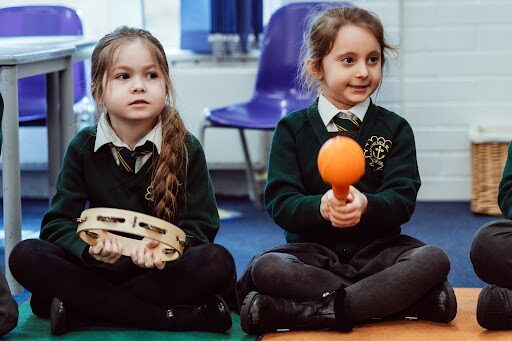
Au 1 | Exploring Pulse and Tempo 1: Feel the Beat
In Year 1, the musical journey begins with an exploration of pulse and tempo, focusing on feeling the beat. This unit aligns with the curriculum’s...

Au 1 | Exploring Pulse and Tempo 1: Feel the Beat
In Year 1, the musical journey begins with an exploration of pulse and tempo, focusing on feeling the beat. This unit aligns with the curriculum’s...


Au 2 | Follow the Leader: Copy Me
In the second unit, “Follow the Leader: Copy Me,” we delve into the realm of memory and imitation. Building on recalling patterns, actions, and rhythms,...
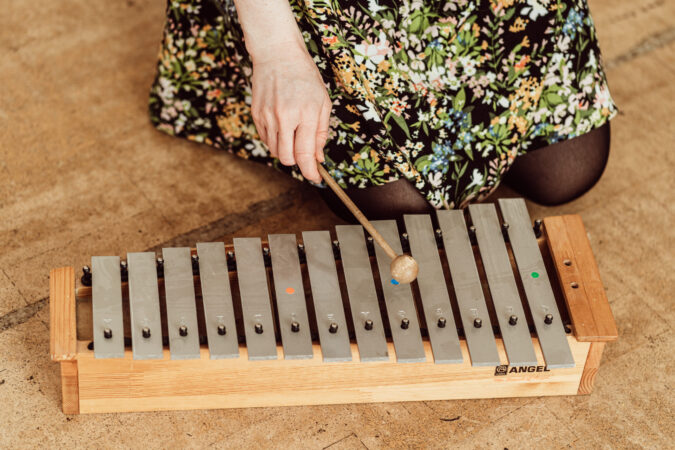

Au 2 | Developing Sight Reading Skills 1: Melodies (Glockenspiel)
In the second half term of Year 5, students work on developing their sight-reading skills, specifically for melodies on the glockenspiel. This unit corresponds with...
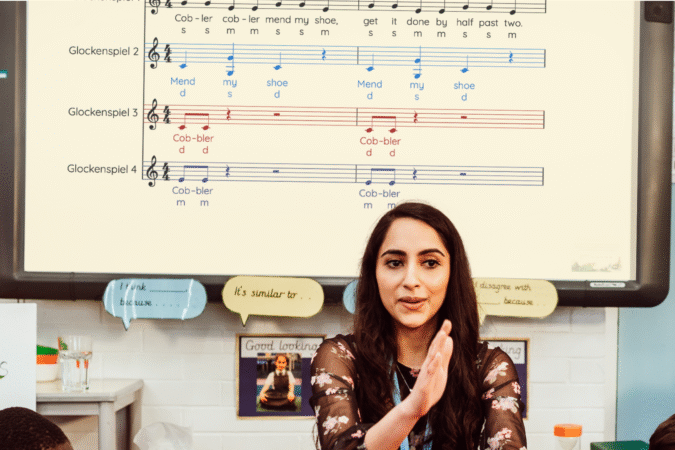

Au 2 | Exploring Staff Notation 2: Follow the Score (Glockenspiel)
The autumn term of Year 4 sees students diving deeper into staff notation, using the glockenspiel. This unit corresponds with the curriculum’s continued focus on...
Course Features
- Lectures 6
- Quiz 0
- Duration 6 weeks
- Skill level All levels
- Language English
- Students 32
- Assessments Yes